Sign up for the farmnewsNOW newsletter
(ID 236725677 © Stephen Linton Dreamstime.com)
Agriculture Roundup

Agriculture Roundup for Thursday March 3, 2022

Mar 3, 2022 | 10:08 AM

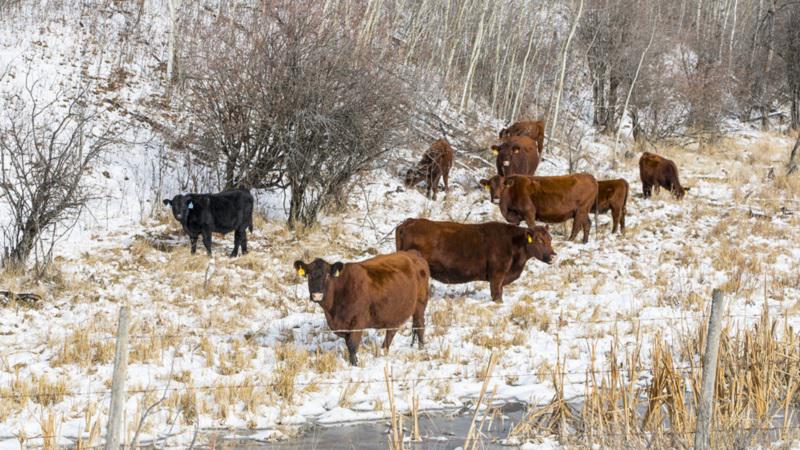
MELFORT, Sask. – Canadian cattle inventories are at their lowest level in 33 years.

Statistics Canada said there were 11.1 million cattle and calves on farms across the country as of Jan. 1. That’s a drop of 0.5 per cent and the lowest number since 1989.

Cattle inventories were up 1.2 per cent to 2.9 million in Eastern Canada. The drought conditions in Western Canada contributed to a drop of 1.2 per cent to 8.12 million.

Alberta had the largest number of cattle at 4.37 million head, or 39.4 per cent of the national total. Saskatchewan was second with 2.21 million head, or 19.9 per cent. Ontario was third with 14.4 of the national cattle herd at 1.62 million head.


Comparing Jan. 1, 2021, to Jan. 1, 2022, Saskatchewan had 65,000 fewer cattle, while Alberta was down by 25,000 head.

Statistics Canada also reported there were cattle and calves on roughly 72,300 farms at the start of the year which is down 0.9 per cent from Jan. 1, 2021.

Fifteen delegates from the Agricultural Producers Association of Saskatchewan (APAS) are attending the Canadian Federation of Agriculture’s annual meeting in Ottawa.

APAS past president Todd Lewis was elected second vice-president of CFA for another term. Lewis has been on the CFA board for the last five years and served as an acting second vice-president last year.

Four of the APAS delegates are participants in the Youth Mentorship and Leadership program. The group met with Agriculture Minister Marie-Claude Bibeau, Opposition Agriculture Critic John Barlow, and senior executives of Farm Credit Canada.

APAS is sponsoring five resolutions for consideration. The meetings wrap up today.

The federal agriculture minister addressed the Russian invasion on Ukraine at the Canadian Federation of Agriculture meetings in Ottawa.

Marie-Claude Bibeau said Ukraine is a major agricultural producer and exporter and any disruptions will be significant.

She said the invasion will likely put pressure on the supply chain and on the prices of inputs such as fertilizer.

alice.mcfarlane@pattisonmedia.com

On Twitter: @farmnewsNOW

View Comments