Sign up for the farmnewsNOW newsletter
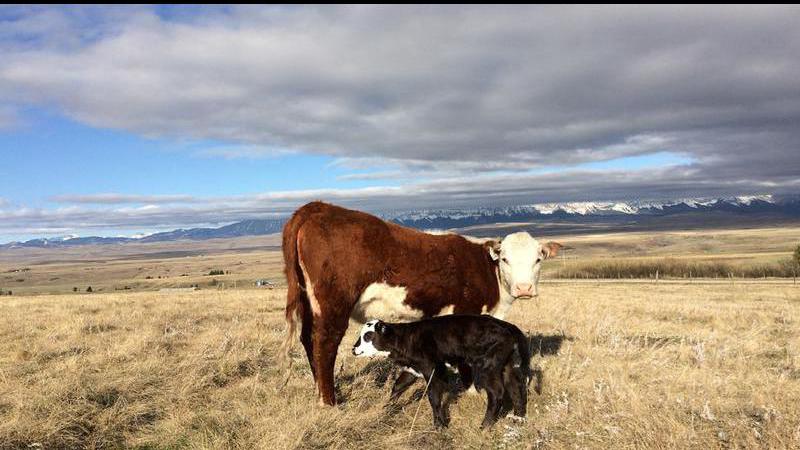
File photo of a cow and calf on pasture (Lethbridge News Now)

Exploring some of the challenges facing farmers at the provincial and national level

Apr 15, 2021 | 3:43 PM

LETHBRIDGE, AB – Farmers in Alberta and across the country are facing many challenges.

COVID-19 is certainly included in that category.

Lynn Jacobson, the president of the Alberta Federation of Agriculture (AFA) was the special guest at the virtual meeting of the Southern Alberta Council on Public Affairs (SACPA) in Lethbridge on April 15.

His full presentation can be seen below.

(Southern Alberta Council on Public Affairs on YouTube)

He noted that despite uncertainty caused by the pandemic, the agricultural industry has been given an opportunity to prepare for other issues it may encounter in the future.

Jacobson said that concerns for the next couple of years are focused on the effects COVID-19 has had on the economy, the health system and the education system.

During his presentation, he said, “as we go forward, how we operate and accommodate these different conditions and that still has to be worked out, but we’re going along.”

Jacobson displayed a level of optimism and positivity, even with the pandemic top of mind, noting 2020 was not a complete loss.

“Last year was a really good year for the oil seed and the grains industry and some of the specialty crop industry.”

AREAS OF TROUBLE

Jacobson noted some areas that encountered trouble were the red meat sector, particularly the beef and pork industries.

“It wasn’t production issues; it was more of the market and pricing.”

He added that areas of agriculture that rely on temporary foreign workers and labour for their farms were impacted as well in 2020.

He cited the latest statistics the federation has seen as showing that because of labour shortages, the industry has lost “probably” about $2.8 billion in sales and economic activity.

RESEARCH

Jacobson said research is an important component to sustaining a positive growth for the agricultural industry. In Alberta specifically, he noted there’s been some changes to the agriculture “regime”.

He said that, “the provincial government, to a certain extent, has been working towards farmer-driven research.”

Last year, the province announced the Results Driven Agriculture Research initiative.

READ MORE: New model for agriculture research in Alberta

Jacobson remarked that, “there’s some concerns we’ve had with this change.”

“With the changes that happened there, there were about 250 to 300 people that were let go out of the Agriculture Department in Alberta, so it [had] a huge effect on staffing and on people, and agriculture research really relies on people.”

CARBON EMISSIONS

The AFA president discussed the federal carbon tax and carbon emissions during his presentation.

Jacobson said, “everybody talks about agriculture’s carbon footprint and how terrible it is to a certain degree, but when it comes down to it, we’re about eight per cent or 8.8 per cent of Canada’s total carbon emissions.”

“When you compare us to other industries such as the oil and gas and the transportation industry – 60 per cent of carbon emissions, [then] agriculture doesn’t look very bad.”

Jacobson remarked that “everybody picks on to animal agriculture and methane emissions”, but people never look “at the whole picture”.

“Especially on livestock production and the life cycle on that, when you talk about [how] cattle live on grasslands and things like this. Grasslands, really, when it comes to carbon sequestering, are really one of the big sequesters out there when t’s managed right, and cattle on that landscape basically make that carbon sequestering possible.”

“If you have no animal agriculture on a lot of those grasslands, those grasslands deteriorate, and they don’t sequester any more carbon. So, it’s a symbiotic relationship with animal agriculture and grasslands.”

Jacobson said he knows emissions are a bit higher when it comes to feedlots, but overall, “cattle really are a net benefit and animal agriculture is a benefit to the country, especially in carbon sequestering going forward.”

On the federal carbon tax, he believes the majority of agricultural producers do not like the tax in its present form.

“Our organization has always taken the view that, we’re going to have a carbon tax, so what can we do to mitigate the effects of it? So, we’ve always been looking for ways for off-setting and off-set programs and off-set efforts for sequestering carbon that can basically be used against our individual footprint and our industry footprint as we go forward.”

View Comments