Sign up for the farmnewsNOW newsletter
(Image Credit: ID 112777961 © Rlesyk Dreamstime.com)
2026 Saskatchewan Crop Report

Excellent conditions push harvest progress

Oct 8, 2026 | 1:52 PM

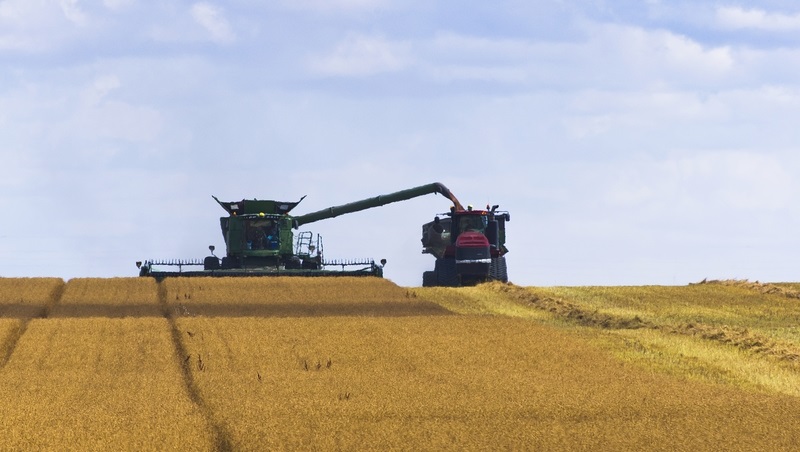
Favourable weather over the last two weeks allowed many farmers around Saskatchewan to wrap up harvest.   

The provincial crop report has combining at 82 per cent complete, up 19 per cent from the previous week.   

Farmers in the southwest and west central regions are the furthest along at 92 per cent, followed by the northwest at 80 per cent, and the southeast at 77 per cent. Both the east central and northeast regions are at 74 per cent complete.   

Crops Extension Specialist Kim Stonehouse said fall rye, winter wheat, and triticale are all harvested, and more crops are closer to 100 per cent completion.  

“Right now, most of the mustard is in the bin at 95 per cent. Canola is at 72 per cent, and that’s probably the largest acres of crop that are still out there because it’s a very large acre crop. Flax is at 51 per cent. Soybeans are at 27 per cent,” he said. “Barley and durum are at 92 per cent, spring wheat is at 88 per cent. Oats are at 77 per cent.” 

More yield reports have been coming in. Reporters have indicated average yields are at 94 bushels per acre (bu/ac), followed by barley at 72 bu/ac, hard red spring wheat at 53bu/ac, and durum at 45 bu/ac. For oilseeds, canola is yielding about 40 bu/ac, flax bu/ac, and mustard 1,039 pounds.  

Regarding the quality of hard red spring wheat, Stonehouse said this year appears to be lower than historical averages.  

“Quality varies quite largely throughout the province, again, due to very low rainfall levels, wet conditions and pest activity that may have caused some problems during the growing season. Right now, we’re sitting at about 31 per cent is grading #1, 44 per cent is grading #2, and 19 per cent is grading #3 and six per cent is grading as feed.”   

There is less crop damage reported since more crops have been harvested, but what remains in the field did receive minor to moderate damage.   

“There are some reports of the wind that continues to blow swaths around, particularly in canola, and that can cause some significant damage as well as there’s wildlife feeding and freezing temperatures that are impacting some immature crops.”

–

alice.mcfarlane@pattisonmedia.com

View Comments