Sign up for the farmnewsNOW newsletter
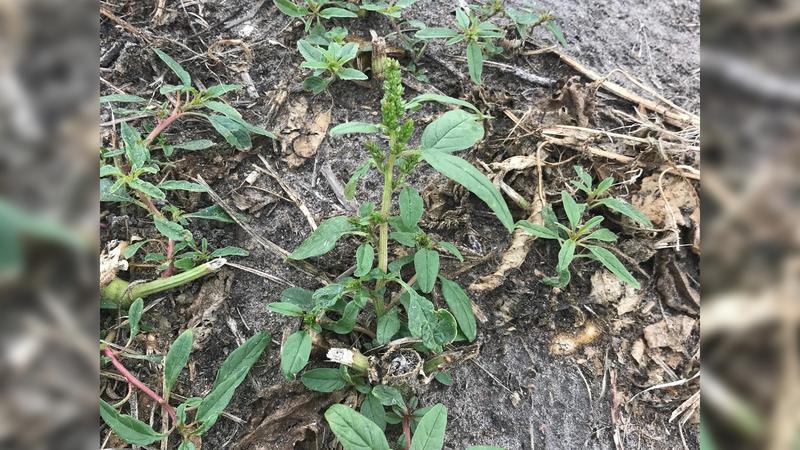
This waterhemp plant found in a soybean crop in Manitoba was quick to regrow two weeks post mowing, even with a seed head ready to flourish. (Submitted photo/Kim Brown-Livingstone)
On the look out

Know what to look for when scouting for invasive weeds

Jan 17, 2022 | 7:16 PM

Grain farmers are consistently busy during seeding and harvesting and there is always something to do while they wait for their plants to grow.

Scouting for invasive species is a constant job and knowing what to look for or being able to spot abnormal plants is half the battle.

Clark Brenzil, provincial weed control specialist with Saskatchewan’s Ministry of Agriculture, told farmnewsNOW that there are some annual weeds encroaching on some areas of Western Canada that grain farmers need to look out for going into a new growing season.

Waterhemp, a pigweed species, is slowly making its way up from the United States and has been spotted in a couple counties in North Dakota and northeast Montana right at the Saskatchewan border.

“Producers neighboring those areas should be on the lookout for any odd looking pigweed species and get that identified right away.”

According to Manitoba’s Ministry of Agriculture, they have found waterhemp in five municipalities in the southeast corner of the province in 2019 and are looking into long term management plans. While redroot, prostrate and tumble pigweed are common weeds on the prairies, Brenzil reported that Waterhemp does have some noted differences to watch out for.

In the seedling stage, waterhemp “has pointed cotyledons that have a mottled appearance (marked with spots or colour), while redroot pigweed cotyledons have parallel sides and a blunt, rounded tip. Waterhemp seedlings also have no hairs on the stem or leaves, while redroot and green pigweed have hairs that make them feel rough to the touch,” Brenzil wrote in a report for the Ministry.

Waterhemp also has longer leaves than redroot with Brenzil reporting that the leaves are “three to four times longer than wide and more oval shaped or gradually taper to a point. Waterhemp leaves have a waxy (shiny) leaf surface whereas other pigweeds have a dull or granular surface.”

In maturity, waterhemp does not have prickly parts and has separate male and female plants.

Herbicide resistant pigweed is more common outside of Saskatchewan, however waterhemp seems immediately resistant to many herbicide groups, with Brenzil calling them, and the pigweed species Powell amaranth, the “kings of herbicide resistance”.

This is especially alarming because Brenzil has heard that there are group 14 resistant lines of these two species, he said.

“One of the challenges with that is group 14 is a bit of the last bastion of herbicide resistance at this point, because they’ve kind of worked through all the other groups. Once you get to that point then you really don’t have much in the way of your standard herbicide control.”

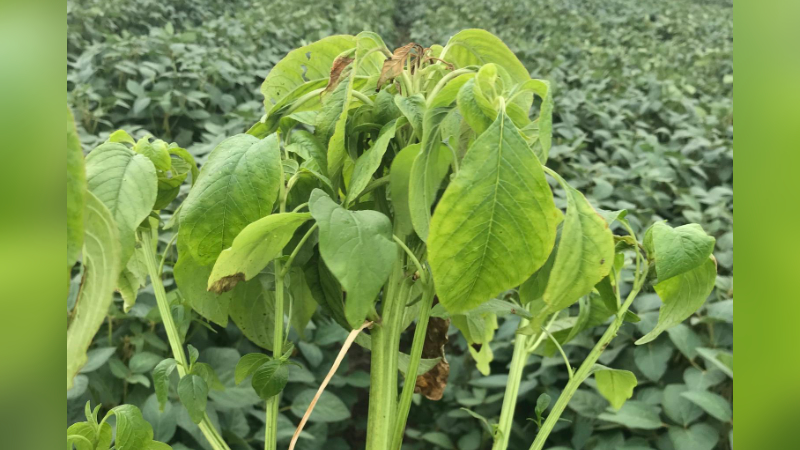
Glyphosate 1 had little effect on ridding this field in Manitoba of waterhemp in August 2021. This plant continued to grow and set seed. (Submitted photo/Kim Brown-Livingstone)

If producers see plants that have survived herbicide application, putting in the time to physically remove them from the field is better than letting them flourish.

Field scabious and leafy spurge continue to cause problems in forage and pasture area, said Brenzil, and producers should report sightings to their municipalities.

Sometimes these outbreaks are managed properly but sometimes they are not, he said.

Diffuse Knapweed and spotted knapweed are also a concern in southern Saskatchewan but Brenzil said there are areas where they have a handle on these populations.

For producers, they need to be just as concerned about the weeds they don’t have than the weeds they do since the weeds they don’t have are weeds they don’t want.

Especially with the movement of hay into drought impacted areas of the country this past fall and winter, Brenzil said invasive species are an added challenge to that.

“If producers are getting hay from a fair distance away that they don’t know what the source of it is, they should isolate that hay in an area that they know that they can kind of come back to and do management after the fact and be able to watch that area for a period of time.”

Animals consuming that hay should also be isolated so seeds do not have a chance to spread in fields through manure.

“What they should do is make sure that they feed those animals for about four to five days with a known clean hay source. And what that does that allows the seeds to get flushed out of their guts and into that area where they’re confined and then once that takes place then you can move them out into those other areas where you don’t have any other risk of introduction.”

Brenzil even suggests producers give their cattle a bit of a foot bath to knock off any mud that may contain seeds as another precautionary practice in invasive species control.

Disposal of annual plants, like the pigweed species, is most effective before it goes to seed. After they are uprooted, drying them out and then burning them is enough to stop the spread. Cutting the tops off before the plant goes to seed is also effective. With perennial weeds, disposal can be a bit more of a challenge since a lot of their spread happens via the root system.

This flowering to seed process can take very little time in some cases, said Brenzil. In some plants it only takes a week and a half, so this is not something that producers can put off.

“You don’t have a whole lot of time to sort of put things off, you kind of have to be right on top of it and be very, very diligent about dealing with those things.”

Dealing with these prohibitive plants from the municipal level, producers are bound by the provincial Weed Control Act, as well as municipal bylaws in some cases, to have a management strategies in place. Property is investigated for prohibited, noxious and nuisance weeds by the provincial weed inspectors who have the authority to introduce weed management measures.

“Early detection and eradication measures are to be taken against prohibited weeds and isolated populations of noxious weeds (less than five hectares per quarter section),” stated the Saskatchewan Weed Control Act. “Containment and integrated control measures are to be taken against established noxious weeds (greater than five hectares per quarter section) and integrated control measures may be implemented to bring infestations of nuisance weeds under reasonable control.”

Those looking to report these or other invasive species can contact Brenzil at 306-787-4673 or by email at clark.brenzil@gov.sk.ca.For additional information about invasive species in Saskatchewan, copies are available of the Saskatchewan Forage Council’s invasive species guide.

becky.zimmer@pattisonmedia.com

On Twitter: @bex_zim

View Comments