Sign up for the farmnewsNOW newsletter
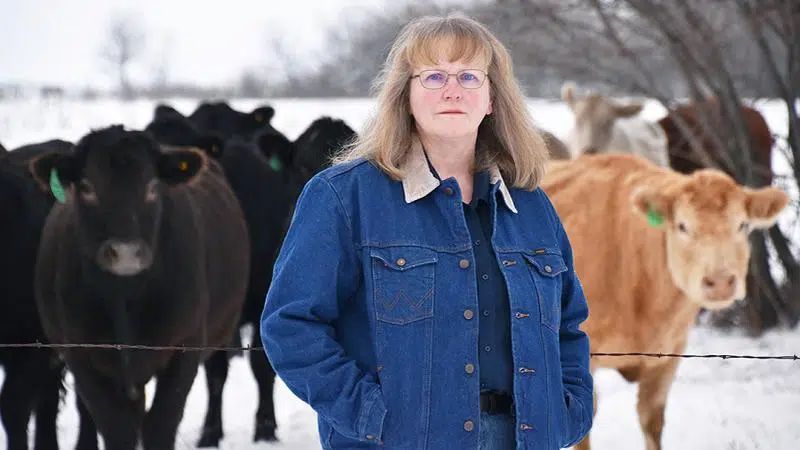
University of Saskatchewan veterinary researcher Dr. Cheryl Waldner will lead a five-year research program on beef cattle health. (Submitted photo/USask)
Beef Cattle Research

USask research targets improved health in beef herds

Jan 30, 2020 | 5:14 PM

The University of Saskatchewan (USask) continues to be leaders in beef cattle research.

USask announced a new research chair will look at several priorities including antibiotic use and resistance during the five year project.

Dr. Cheryl Waldner with the Western College of Veterinary Medicine said one of the immediate projects is the development of genomics tools to identify the right drug, at the right time, in the right animals, to address bovine respiratory disease.

“If we can diagnose the condition faster, if we can provide more evidence based recommendations for antimicrobial use, we will save the industry a significant amount of money,” she said. “But we will also protect antimicrobials and reduce the development of antimicrobial resistance.”


Waldner’s team will work collaboratively with veterinarians and cattle producers to evaluate antibiotic use in treating bovine respiratory disease.

Waldner said they will also develop specialized diagnostic and data management tools that will generate results in real time.

“Rather than having to wait for these results to come back from the lab we’re going to be able to provide strong evidence that says, yes, this antimicrobial is very likely to be working, that this is a bacterial disease that requires an antimicrobial and get that information to the producer in the time necessary to actually make a effective treatment decision,” she said.

USask will provide $850,000, the research chair receives $750,000 in federal funding. Another $750,000 will come from producer check-off funds.

Beef Cattle Research Council chair and Whitewood area cattle producer Ryan Beierbach said it’s important to have accurate scientific information on antimicrobial use.

“It’ll give us some information when it comes time to help guide government regulation to make sure they’re based on accurate information,” Beierbach said. “Between reducing producer costs from the use of antimicrobials and making sure that we aren’t overly burdened with extra rules that don’t make sense, I see it having a big benefit to Saskatchewan and Canadian producers.”

USask computer science researchers will develop new computer modeling, smart phone apps and sensors for producers and veterinarians.

alice.mcfarlane@jpbg.ca

On Twitter: @AliceMcF

View Comments