Sign up for the farmnewsNOW newsletter
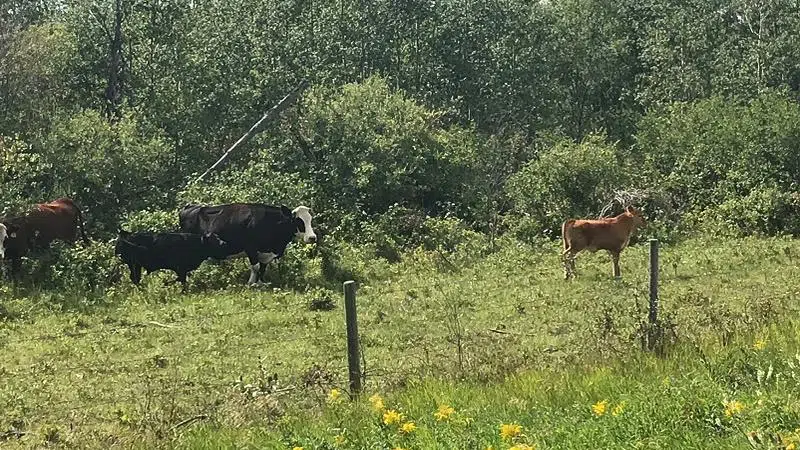
(Alice McFarlane/farmnewsNOW Staff)
Pasture Management

Brush control in pastures

Dec 16, 2019 | 5:00 PM

Brush encroachment is a significant threat to pasture productivity.

If left unmanaged, trees and shrubs like poplar, willow and snowberry can reduce the carrying capacity of a pasture, sometimes to the point where there’s hardly any grass left for the cattle.

Ministry of Agriculture range management extension specialist Luke Jorgenson said, in the past, brush expansion was controlled by frequent fires. While fire can be effective at controlling trees and shrubs, it has its risks.

He said there are a number of tools available to producers to help mitigate brush encroachment.

“Besides fire, there are three main methods; mechanical, chemical, and intensive grazing. A good brush management plan often includes more than one approach as integrating the techniques can result in much more effective control,” he said.

Mechanical control

This involves physically damaging the top growth. Jorgenson said this can include a variety of equipment that can be effective in different situations. Jorgenson said everything from bladed equipment, mulchers and rollers can be used to control brush with varying levels of success and cost.

“It’s most effective in late May or early June. After mechanical control is used, it’s usually a good idea to follow up with intensive grazing, grazing in late spring or early summer. Cattle eat the new growth before it becomes unpalatable,” he said. “This helps you go longer between mechanical treatments. Just remember to provide adequate rest so the grass has a chance to grow.”

Chemical control

Jorgenson said herbicides can be used as another control method.

“There are a number of treatments registered for brush control in pastures,” he said. “These are listed in the Saskatchewan guide to crop protection and can be sprayed through aerial or ground application depending on the goals in your pasture.”

Intensive grazing

Jorgenson said this requires the use of a high stocking density for a short time with a specific goal of keeping the brush in check.

“Like mechanical control, grazing can be used to help control regrowth in the years after the treatment,” he said. “The Ministry of Agriculture’s range management extension specialists are involved in a demonstration project comparing different brush control techniques across the province and will be organizing field days in summer 2020.”

Luke Jorgensen is a rangeland management specialist located at Watrous.

alice.mcfarlane@jpbg.ca

On Twitter: @AliceMcF

View Comments