Sign up for the farmnewsNOW newsletter
(ID 67533946 © Egasit Mullakhut Dreamstime.com)
Agriculture Roundup

Agriculture Roundup for Wednesday February 2, 2022

Feb 2, 2022 | 3:11 PM

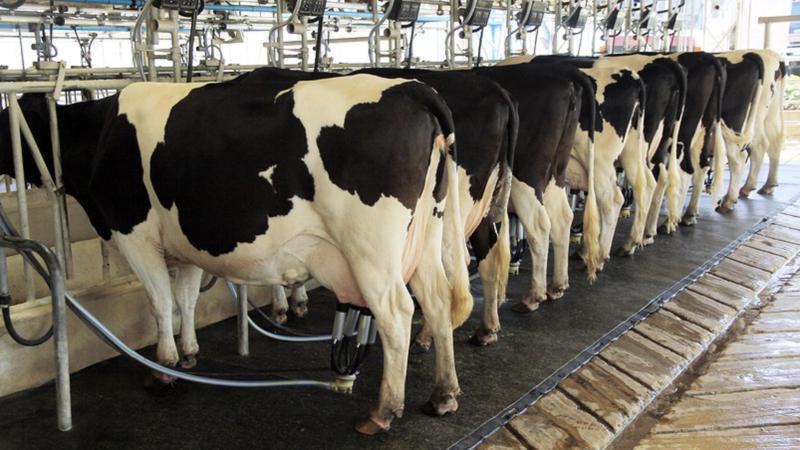
MELFORT, Sask. — Dairy Farmers of Canada (DFC) unveiled a goal to reach net-zero greenhouse gas (GHG) emissions from farm-level dairy production by the year 2050.

DFC president Pierre Lampron said this is a continuation of the ongoing efforts by the dairy industry. He said from 1990 to 2019, Canadian dairy farmers reduced the carbon footprint of milk production by 22 per cent through improved management practices.

“For generations now, Canadian dairy farmers have been stewards of the land, adapting their practices based on science and innovation,” Lampron said. “Our leadership in the area of sustainability is already recognized internationally, as we have one of the lowest carbon footprints per litre of milk produced.”

Lampron said achieving the objective will require dairy farmers to adapt but will also mean the proper government supports need to be in place to make it happen.


Syngenta Canada is providing financial support to the Canadian Agricultural Safety Association’s (CASA) farm safety programs.

Syngenta donated $25,000 for programs like On-Farm Agricultural Worker Safety Training, youth safety, and Safety for Women in Ag.

CASA chief executive officer Andrea Lear said identifying the unique needs of each person on the farm is an important step in making farms a safe place to live and work.

“Syngenta is helping support CASA programs that are very much needed,” Lear said. “These dollars will positively impact the lives of Canadian farmers, farm workers and farm families.”

CASA works to promote farm safety through resources, training, and partnerships. CASA farm safety programs equip farmers, farm families, farm workers and farming communities with information and tools needed to make farms a safe place to live and work.

Officials say about 136 million kilograms of Prince Edward Island potatoes will need to be destroyed because of the ongoing export ban to the United States. That’s about one-tenth of the island’s yield for last year.

The federal government and Prince Edward Island announced an agreement on diverting surplus potatoes.

Producers will receive up to 8.5 cents a pound for the disposal of potatoes.

The $40-million program will see Ottawa contribute $28 million and P.E.I. $12.2 million.

Americans have raised concerns about two cases of potato wart, a disease which has been under control for several years.

An estimated 290 million pounds of PEI potatoes will be diverted to processors, packers, dehydrators, food banks and other markets.

Federal Agriculture Minister Marie-Claude Bibeau said officials knew the longer the ban lasted, the more likely it was that potatoes would eventually need to be destroyed.

alice.mcfarlane@pattisonmedia.com

On Twitter: @farmnewsNOW

View Comments