Sign up for the farmnewsNOW newsletter
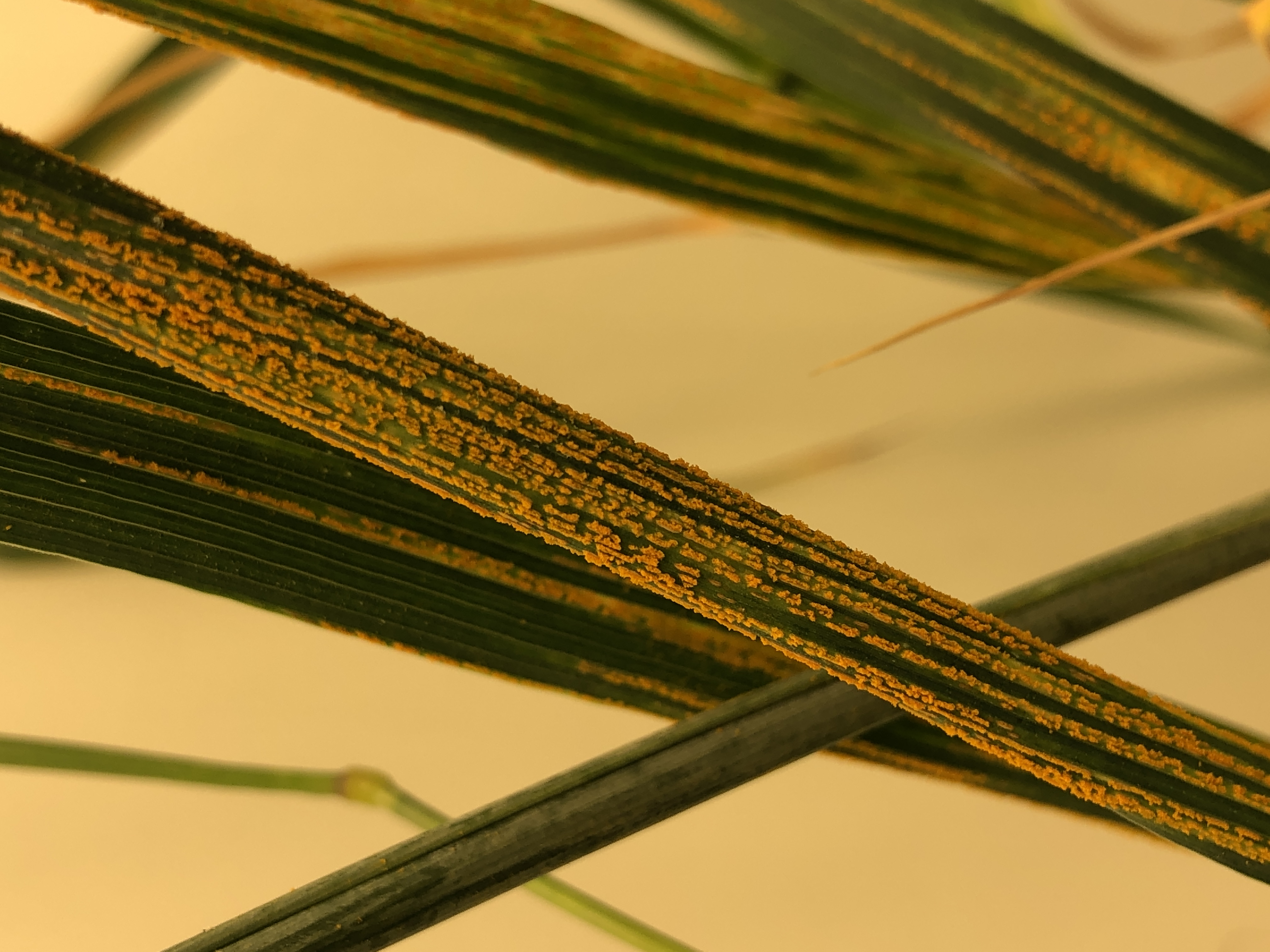
Rust pathogens are an ongoing problem for Canadian producers. (Submitted photo/Dr. Gurcharn Brar)
Rust Resistance

Search for rust resistance in wheat an ongoing process for genetic researchers

Jul 28, 2021 | 11:24 AM

HUMBOLDT, Sask. — Rust pathogens are an ongoing problem to say the least for Canadian producers, including stripe, stem, and leaf rust.

For researchers at the Faculty of Land and Food Systems at the University of British Columbia (UBC), their work helps develops rust resistance wheat genotypes that benefit producers in Canada and around the world.

For Dr. Gurcharn Brar, Assistant Professor of Plant Science, this work on stripe rust is ongoing as they are constantly trying to get ahead of the pathogens by fighting against evolution, spore movement, and time.

“I do research and I identify which genomic region of that plant has the resistance for this to be,” Brar told farmnewsNOW. “And then we use molecular tools, DNA-based markers that breeders and we use to basically transfer the gene to susceptible varieties, but it is not that easy of a task.”


“One thing about these rust pathogens is they can easily defeat a resistance gene in a variety over a few years which means we will have to keep coming up with the new resistance genes”

Dr. Gurcharn Brar, Assistant Professor of Plant Science UBC (Submitted photo)

It takes about three to five years to identify and transfer any new resistance genes over to modern adapted varieties which serve as source of resistance for breeders in variety development, said Brar.

Part of this research is also looking at how pathogens move and mutate over time and the mechanisms that drive these changes.

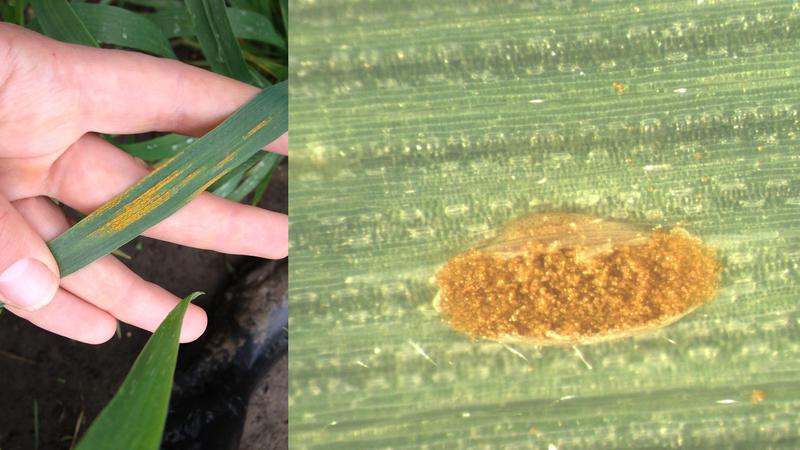
A single infected plant leaf can have millions of rust spores and if we multiply that by the number of plants per acre and there are billions of spores to spread the disease or mutate with the lowest rate and result into a new pathogen strain/variant, said Brar.

Stripe rust, unlike stem or leaf rust, is a relatively new disease that Canadian producers have to deal with, said Brar. Older strains prefer cooler climates like those in the Pacific Northwest, he said. But a new strain from East Africa that hit Canadian shores around 2000-2001 are more prevalent in warmer climates and quickly established itself on the prairies.

Brar works closely with wheat breeders in western Canada to develop rust resistant pre-breeding germplasm.

“We collect the pathogen isolates, or pathogen samples from farmer’s fields every year…we study these samples for their virulence because we keep identifying races and with that basically keep breeders and pathologists informed that what kind of pathogen races exists.”

This has been Brar’s work since grad school when he started looking at stripe rust populations in Western Canada in commercial crops. While some rust strains are more prevalent than others, he said, this does mean they are more dangerous as other lesser prevalent races can actually be more devastating.

Since British Columbia is close to Pacific Northwest i.e. epicenter of stripe rust, we have perfect climate to study the stripe rust and screen wheat for resistance.

(Submitted photo/ Dr. Gurcharn Brar)

Producers can do nothing to prevent spores from travelling these great distances, but applications of fungicides and growing rust-resistant varieties can prevent yield loss. Since the movement of pathogens is windborne, crop rotation does not help in rust management considering spores can overwinter in winter wheat and producers can find stripe rust as early as May and June in some regions.

becky.zimmer@pattisonmedia.com

On Twitter: @bex_zim

View Comments