Sign up for the farmnewsNOW newsletter
(Image Credit: (file photo/farmnewsNOW Staff))
Pea and lentil disease

Root rot continues to challenge researchers

Feb 18, 2026 | 10:53 AM

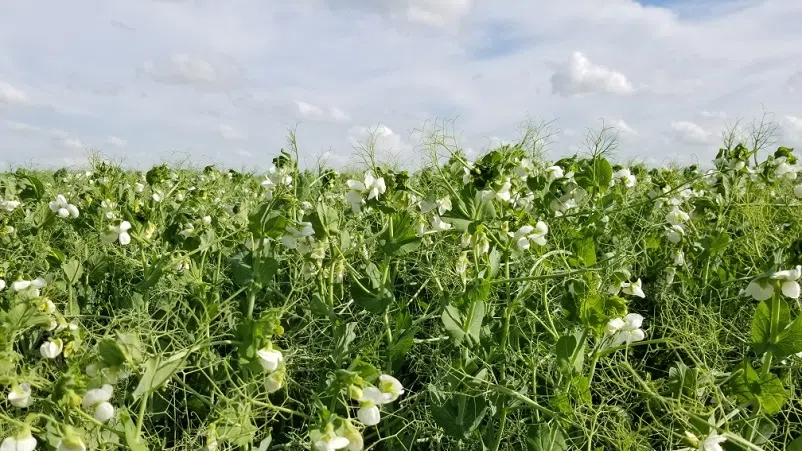
 The root rot complex is the number one disease concern for pea and lentil growers. 

The disease became more prevalent in the wet years of 2014 and 2016. Since that time, $53.5 million has been invested in disease research, including $20 million through Saskatchewan Pulse Growers and producer levies.  

The most serious part of the root rot complex is aphanomyces. Fields testing positive for aphanomyces should not be seeded with peas or lentils for at least eight years.  

Sherrilyn Phelps, the director of research and development with Saskatchewan Pulse Growers, said a root rot task force was established in 2022 to coordinate research efforts.  

“The root rot task force, which is a collaboration of Alberta Pulse Growers, Manitoba Pulse and Soybean Growers and Saskatchewan Pulse Growers developed a strategy to look at eradicating root rots and it’s quite complex,” Phelps said. “Not only is it about investing in research but it’s also ensuring that there’s coordination on funding available to invest in research and not duplicating what others might be already doing. Then it’s also about communicating those results and getting them into the hands of growers as quickly as possible.”  

Phelps said the research is focused on the three components of the disease triangle, pathogen, host, and environment. She said it’s about understanding what’s there, how to control it, and understanding the complexities. 

“Then moving on to the host which is the crop and looking at how we can build resistance and manage that crop to have less impact on the root rot. That’s the biggest component,” she said.   

The third part is to manage the environment that the crops are growing in and understanding the conditions that affect it.  

“What soil characteristics can we influence, like drainage for one, if we’re looking at a water issue. But there’s other factors as well, looking at nutrient levels, looking at soil pH, looking at calcium levels.”  

Phelps said progress on root rot resistance is further ahead on peas than lentils.  

“On the breeding space, peas are further advanced in terms of levels of resistance than lentils because they were able to identify some genes that confer partial resistance in domesticated peas. They didn’t have to look elsewhere, and so they’re looking at just stacking those levels of resistance to try and give you as much protection as possible. With lentils, those don’t exist.” 

Phelps said that means is going to lentils’ wild relatives and trying to bring traits in from that species, which is very complicated and is a long process.  

“When you do that, it also brings in a lot of negative traits that you also have to breed out. It just takes a lot longer. With peas, the material was just sort of there to start with. So, we’re just much, much further along than we are with lentils,” she added.  

Phelps said since there is no silver bullet, developing root rot solutions is taking quite a bit of time. 

alice.mcfarlane@pattisonmedia.com

View Comments