Sign up for the farmnewsNOW newsletter
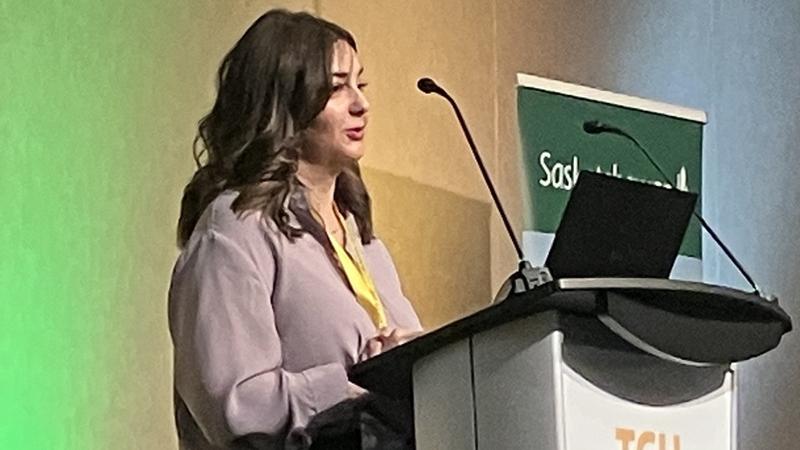
Jessica Ens is with the Western Applied Research Corporation at Scott, Sask. (farmnewsNOW Staff)
Kochia control

Herbicide-resistant weeds requires an Integrated Weed Management approach

Dec 29, 2025 | 3:45 PM

Herbicide resistance is a growing concern with kochia being one of the most serious issues.

The subject was covered during a couple of presentations at the Saskatchewan Agronomy Research Update in Saskatoon earlier this month.

The Western Applied Research Corporation (WARC) at Scott, Sask. did not find any herbicide resistance in samples taken in field surveys between 2018 and 2021. It is a different story now, according to Jessica Enns, WARC research manager.

“We’re actually seeing quite a bit of resistance to saflufenacil. That’s the product called Heat. We found that at a 3X rate in some of these kochia populations, particularly in the Kindersley area, which is where these kochia plants were gathered,” Enns said. “We had a 3x resistance at some points, we had a 10x resistance to some of this kochia biomass. Overall, we found a 57 per cent to 87 per cent resistant to saflufenacil.”

Enns said research is also continuing to to determine the best timing and frequency for mowing kochia.

“If you cut off the top, it’s going to grow seeds from the bottom. What we want to figure out is how are those seeds developing? How quickly are they developing? Are they viable? If we mow it in June, is it really doing anything because it’s still producing seeds? Do we have to go in twice?” she said. “What we’re really trying to figure out is what’s the best time for farmers to get in there and get this kochia controlled and narrow it down to reduce the amount of seeds that are going back into that seedbank.”

Another piece of the puzzle could be harvest weed seed control. Josh Lade, who farms in the Osler area, uses the Seed Terminator. He said it’s a simple attachment to the combine harvester that crushes the weed seeds before they become weeds. He has been using the Seed Terminator for eight years.

“If we can get these seeds into the combine and through the mill, they’re done. There is an area on our farm that used to be pure kochia. Now we’ve dropped our populations through not just seed terminating but also herbicides. We’ve got a crop growing there now,” Lade said. “We haven’t been putting fertilizer on these areas for six years as well, or longer.”

Lade said it’s a full multi-pronged approach.

“So there’s not just one thing but I am a firm believer that, especially with kochia, if we can just reduce those populations and it just reduces selection pressure for the herbicides.”

alice.mcfarlane@pattisonmedia.com

View Comments