Sign up for the farmnewsNOW newsletter
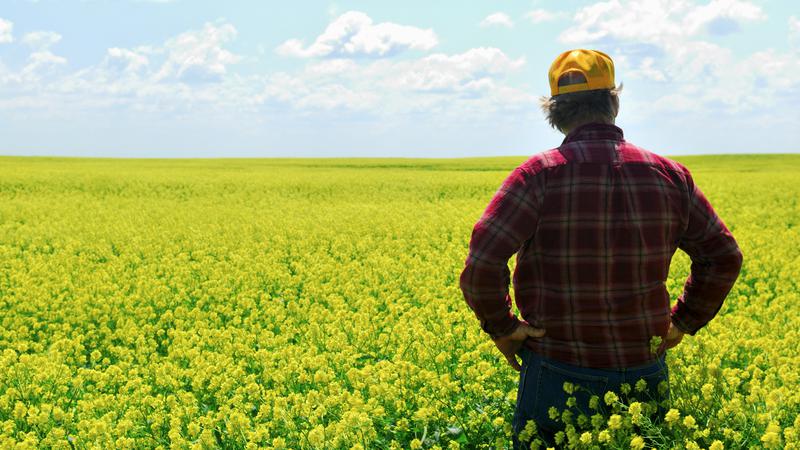
A farmer in a canola field in Saskatchewan. (ID 5723538 © Lorraine Swanson | Dreamstime.com)
TRADE WAR

‘It’s very troubling’: Sask. farmers brace for ongoing Trump’s tariff threat

Mar 3, 2025 | 3:24 PM

As U.S. President Donald Trump threatens steep tariffs on Canadian goods, Saskatchewan farmers worry they’ll have to lower crop prices to stay competitive.

For Riley Wallace, a canola grower in Unity, the concern is immediate.

“Almost all of our canola oil that gets exported goes to the United States,” he said. “They’re just going to be passing that cost down to us in the form of a reduced price.”

Trump’s executive order to impose a 25 per cent tariff on all Canadian products — with a lower 10 per cent levy on energy — was delayed until Tuesday after Canada agreed to introduce new border security measures. But for farmers like Wallace, the delay offers little reassurance.


Saskatchewan exports a large portion of its canola to the U.S., and he estimates much of the crop eventually ends up there.

In 2023, the province exported more than $3.2 billion in each of its four key crop sectors: cereal grains, oilseeds, pulses and edible oils. The U.S. was Saskatchewan ‘s top agri-food export destination, accounting for $6.7 billion in trade.

President Donald Trump. (photo/ The Canadian Press)

Wallace also noted that many Canadian canola-crushing plants are American-owned, adding complexity to the situation.

“I can’t see [Trump] wanting to hurt American companies,” he said. “You can’t pick up a crush plant in Lloydminster and just move it down to Texas because there’s no canola there.”

Bill Prybylski, president of the Agricultural Producers Association of Saskatchewan, shares Wallace’s concerns — particularly the uncertainty of how long the trade standoff could last.

“It’s very troubling,” Prybylski said. “We don’t know exactly how much of a financial impact it’s going to have if the tariffs take effect.”

He also warned about the potential for retaliatory tariffs.

“If there are retaliatory tariffs, how is that going to affect our commodity prices and input costs?” he said.

Beyond agricultural exports, Prybylski pointed to another looming issue: the cost of farm equipment.

“We buy a lot of equipment and steel manufactured in the States out of steel that comes from Canada,” he said. “The manufacturers aren’t likely to absorb that extra cost. They’re going to pass it on to the consumer, which happens to be the producers.”

Despite the uncertainty, farm operations carry on.

“In the short term, most producers are just going about their business as usual,” Prybylski said. “Some are into calving season now, so they’re busy with that. Grain is still moving, and we’re getting our seeding plans in place.”

Wallace said farmers are no strangers to unpredictable markets.

“We’re kind of used to dealing with things out of our control and only managing what we can,” he said.

Both hope the Saskatchewan government will continue pushing back against the tariffs.

“The premier and several of his ministers have been making trips to the States to plead our case,” Prybylski said.

Saskatchewan Premier Scott Moe was in Washington, D.C., from Feb. 24 to 27, leading a delegation of business leaders to highlight the importance of cross-border trade and head off the threatened tariffs.

The province, Moe said, will “make every effort to head off any imposition, whether it be tariffs from President Trump or counter-tariffs from Canada.”

As the agriculture industry braces for what’s next, Wallace believes diversification is the best strategy.

“If we rely on one trading partner, we’re subject to these protectionist policies,” he said. “We need a balanced marketing plan and different partners.”

-With files from CKOM News and The Canadian Press-

Kenneth.Cheung@pattisonmedia.com

View Comments