Sign up for the farmnewsNOW newsletter
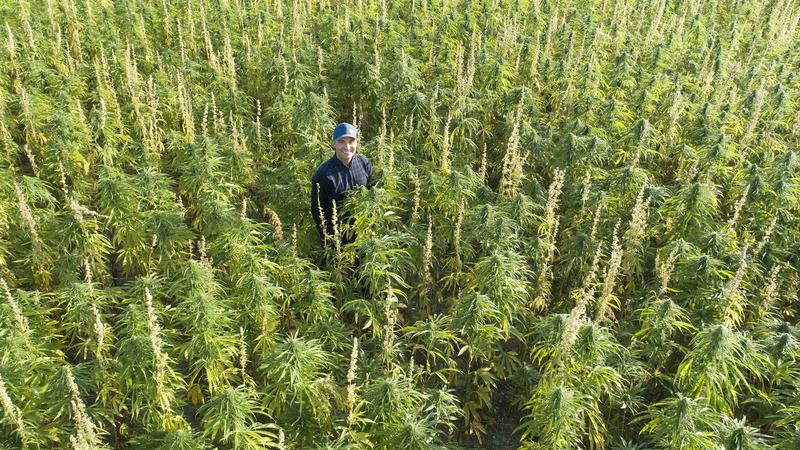
Wilson Johnston, Co-Founder and Chief Agronomist at Blue Sky Hemp Ventures believes hemp genetics is the key to developing higher efficiencies in hemp harvesting. (Submitted photo/Blue Sky Hemp Ventures)
Food, fibre, and CBD

Greater plant efficiencies the key to growth in hemp industry

Jul 28, 2021 | 11:21 AM

HUMBOLDT, Sask. — When it comes to hemp production in Saskatchewan, there is much more that needs to be done to grow the industry in the province. According to Health Canada, there were 731 federal licences for hemp cultivation administered in 2019 with Saskatchewan, Alberta, and Ontario holding the top spots for licenced growers.

Hemp production has been around for decades, with a growing interest starting in the 80s and 90s with a focus on hemp fibre and food products. Significant research into growing hemp in Canada took place between 1994 and 1998, and, according to the Government of Canada, the hemp industry has seen even more growth thanks to recent federal cannabis regulation.

Now focus on production can be seen in three areas; food products, fibre usage, and CBD biomass.

For Blue Sky Hemp in Saskatoon, Sask., growing the market means increasing the utilization of the entire plant but high output only occurs for one of these areas at a time, says Wilson Johnston, Co-founder and Head Agronomist of Blue Sky Hemp Ventures. Hemp has been around Canadian markets for the past 20 years, Johnston told farmnewsNOW, but producers haven’t been able to collect on CBD production until the Cannabis Act. CBD oil is still not available as a natural health product and is only available through cannabis retailers and the consumer demographics that shop in these two different retail locations don’t always match up, said Johnston.

“Even though it’s been around for a couple decades, the value of the different components, it’s not really well known what hemp can all be used for.”

On average, only around 10–15 per cent of the entire plant is extractable, said Johnston, but if a variety has strong CBD biomass output, it lacks in the other areas like food and fibre. This equates to about 700 to 1,200 lb per acre of dryland production, while on the CBD side, producers are looking at 200–300 lb of biomass per acre.

“There are some CBD single-purpose type varieties that maybe 50–60 per cent of that volume would be extractable. But these are totally different looking plants that are really low plant populations that don’t have a whole lot of fibre stock because they really are just being grown for that bud and flower production.”

Rather than just grow a crop to harvest for each of the three separate components of the plant, Johnston believes there is a path for finding the right genetics to grow a crop that can be harvested for seed, CBD biomass, and the fibres.

“We’re using the CBD flour for extractable cannabinoids, and we’re using the herd and fibre from the stock for different industrial and textile type products. [We’re] really trying to use those three different components of the plant.”

There has been “a renewed interest in hemp as the crop, but also in the genetic and investment into utilizing different components of the hemp plant,” said Johnston.

There has already been a lot of work done by “hemp pioneers,” he said, “to get the food industry up and moving and get hemp hearts, hemp seed oil and hemp proteins into the Canadian, US and global markets.”

For Johnston, “broad acre solutions for hemp production that gives growers value on the seed, the flour, and the fibre components” has been the main goal for Blue Sky Hemp, but while government regulation has opened up the markets in some respects, they have also created new challenges for the hemp market.

becky.zimmer@pattisonmedia.com

On Twitter: @bex_zim

View Comments