Sign up for the farmnewsNOW newsletter
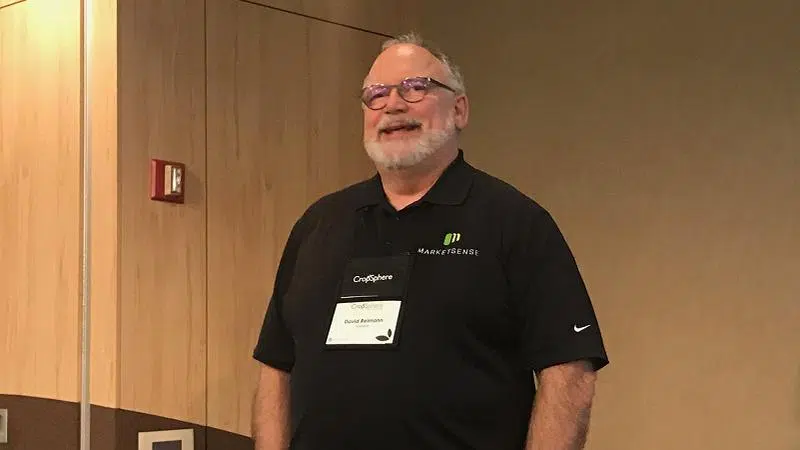
Market analyst Dave Reimann talks to farmers at CropSphere conference in Saskatoon. (Alice McFarlane/farmnewsNOW Staff)
Commodity Markets

Marketing in uncertain times

Jan 23, 2020 | 10:34 AM

Don’t buy into the hype.

That was the message from Dave Reimann, a market analyst with Cargill’s MarketSense program.

He told farmers at the at the CropSphere conference in Saskatoon there is a lot of information coming at them everyday and they should take it with a grain of salt.

“Sometimes there is a habit of jumping at a headline as opposed to maybe reading the details,” Reimann told farmnewsNOW. “There is a lot of news that may not necessarily be through accredited media. Twitter is a powerful tool now. You’ll see stories breaking that may cause farmers to act when in fact they should be doing the opposite.”


Reimann said his key message is to do your research, find out what the truth is and that will help you govern your marketing decisions more accurately.

He said their was a lot of chatter about the United Arab Emirates buying Canadian canola seed, crushing it and then selling the oil to China. Reimann said this was happening long before Canada’s canola trade dispute with China flared up.

“I think it’s fair to say that we’re doing a little bit more with them this year as a result of the China situation with Canada,” he said. “They are importing more oil from the United Arab Emirates. But at the same time, we have done larger volumes with them in the past and been dealing with them for years. I think the largest reason the plant was built in the first place was to capture Canadian and Australian canola to sell into Asia and European markets.”

Reimann also advised producers to not be afraid to market grain before harvest.

“I think some of the best marketing opportunities come at April, May, June, maybe even into early July, when there’s the most uncertainty about production. But those are sometimes the best opportunities both in cash and futures markets,” he said. “But often we see farmers afraid to move at that point because of production risk, but then they’re forced to sell off the combine which is often the worst time. So a key message for me is separate pricing from delivery. Don’t be afraid to sell some ahead of harvest.”

Reimann said if your crop is a little bit smaller, you’ll still have some unpriced bushels and you have some flexibility when you are able to capture those opportunities.

There are many factors that can impact a farming operation. Reimann said control what you can control.

“We stress out a lot about things like politics and trade barriers, weather, currency movements and African swine fever. The list goes on and on. We can’t control any of that stuff. It’s easy to feel really powerless. But if you use some contracting methods like minimum pricing strategies that allow for gains but protect you against losses, you can control that. You can eliminate a lot of the fear, risk and anxiety caused by the other issues.

Reimann offered another piece of advice for producers as they’re planning for the next crop year.

“I think just be prepared to take advantage of opportunities when they’re there. I don’t think we need major changes in the crop rotation. But we may need to look at some contracting solutions and capture opportunities as they come. I think it’s going to be a great year.”

alice.mcfarlane@jpbg.ca

On Twitter: @AliceMcF

View Comments