Sign up for the farmnewsNOW newsletter
ID 28577818 © Johncarnemolla Dreamstime.com
Livestock Water Testing

Testing water sources for livestock easy to do

Jun 11, 2021 | 4:07 PM

MELFORT, Sask. — Water is the most important nutrient for livestock.

It is consumed in large quantities relative to other nutrients, according to Ministry of Agriculture livestock and feed extension specialist Alicia Sopatyk.

However, there is an increased risk of dissolved minerals in the water that can negatively affect animal health and productivity.

“It’s important to know the quality of it,” Sopatyk told farmnewsNOW. “Surface water sources can change depending on the recharge that they get through rains or evaporation.”

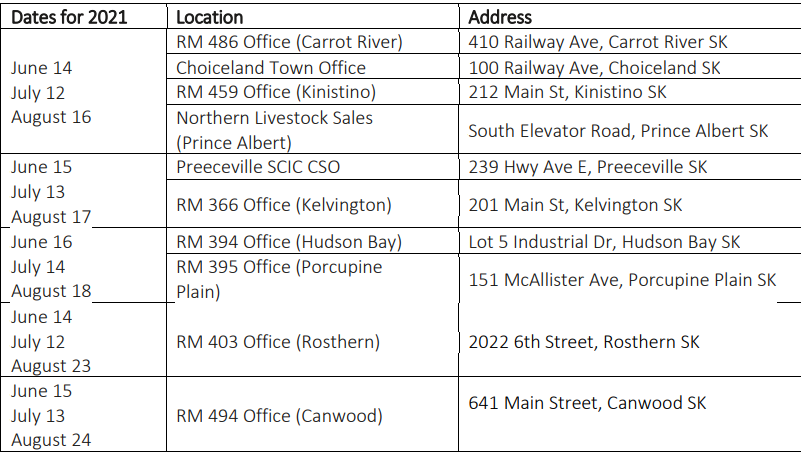
Sopatyk said checking the quality of your livestock water sources is easy to do thanks to water screening and testing services offered throughout the region.

The service is available at no charge, provided the water is for livestock use and the livestock producer has a registered Premises Identification (PID) number in Saskatchewan.

“All you need is a one-litre sample from that water source that you’re using for your livestock. You can bring it into our regional office or one of these collection sites on specific days” she said.

(Submitted/Ministry of Agriculture)

“We can screen the water samples using an electric conductivity meter and if that initial screening shows it may be a problematic source, we would send it away for further testing through the Roy Romanow Lab in Regina,” Sopatyk added.

Livestock Water Sampling Guide Collection

Samples are to be collected at a point where livestock are directly drinking from.

One litre of water is required for every location and can be collected in any clean container provided that it can be reliably sealed, easily labelled, and not at risk of breaking or leaking during transport. Each location also has sample bottles available.

Labelling

Each sample must have the following information neatly printed on the container.

  • Sample number (if more than one sample)
  • Your full name
  • Land location of source
  • Source type (dugout, well, slough, etc.)
  • Nickname for source (Home Quarter Slough, Far Pasture Dugout, etc.)

Contact information

When you drop off your sample you must also provide the following information on a single form provided at collection site.

  • Date samples were collected
  • Your name
  • Phone number and email (indicating preferred contact method)
  • Your Premise Identification Number (mandatory for all SK livestock owners)
  • R.M. number
  • List of samples (if more than one)
  • Comments about samples (whether you are concerned about sources, just routine testing, have had previous issues, etc.)

To register for PID visit premisesid.sasaktchewan.ca or call 1-866-457-2377.

alice.mcfarlane@pattisonmedia.com

On Twitter: @farmnewsNOW

View Comments