Sign up for the farmnewsNOW newsletter
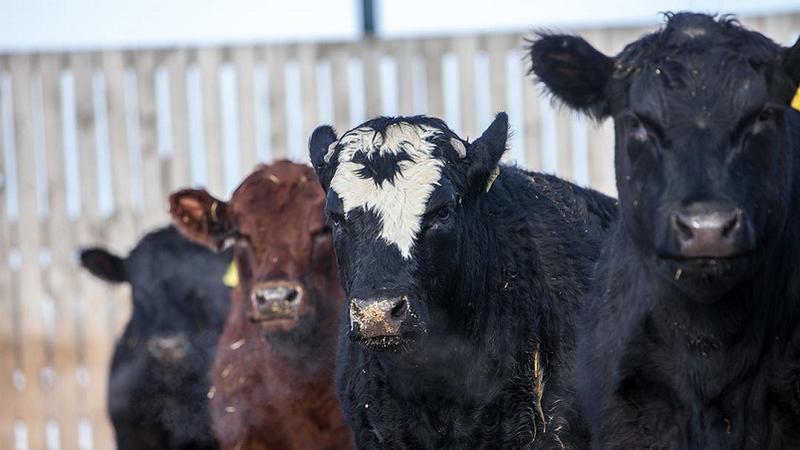
(submitted photo/University of Saskatchewan)
Beef Research

USask beef research project focuses on biology

Mar 9, 2021 | 9:56 AM

MELFORT, Sask. – A multi-agency research team led by the University of Saskatchewan (USask) is searching for ways to make beef production more sustainable.

Led by veterinary reproductive biologist Dr. Gregg Adams, the work will speed up the process of improving the productivity, efficiency, and sustainability of Canada’s $18-billion beef sector.

Adams said the work will integrate advances from the field of omics into livestock production.

“USask has an amazing facility and program centred around the Livestock and Forage Centre of Excellence (LFCE), and expertise in all areas of livestock production, but one thing that has been missing is a genomic component,” Adams said.


Researchers have made tremendous progress in these areas over the past decade. Adams said they can now use these advanced tools for extensive livestock production.

Genomics and other omics tools in biological science like phenomics, microbiomics and proteomics involve the study of the appearance, structure and behaviour of animals, their microbiomes and cell proteins.

Adams said the beef cattle industry is tremendously important on the Prairies with Saskatchewan and Alberta accounting for 70 per cent of Canada’s beef production. He said even small changes in performance translate into big gains in economic value and job growth.

The project has been awarded $6.75 million over five years by the Canada Foundation for Innovation (CFI), with another $10.1 million expected from institutional partners and the private sector.

By bringing together experts in microbiology, epidemiology, reproductive biology and forage nutrition, the project aims to integrate the advances in omics tools to address challenges in the beef industry. Some of the challenges are disease management, fertility improvement and environmental impact mitigation, something already in place in the dairy, hog and poultry industries.

Adams said the first step is to gather previously unavailable behavioural and other physical data on beef cattle by placing multispectral cameras in pastures and close confinement areas and linking the information with gene markers for desired traits.

“Once we identify these markers we can actually begin to collect the genetic material or germplasm, embryos and semen from those individuals that have desirable characteristics,” he said.

The goal of IntegrOmes is to make it easier for cattle producers to identify and breed animals with desired traits for better meat quality, stronger disease immunity, healthy uterine and semen microbiomes, shorter gestation periods, and good maternal behaviour and heavier calf weights at weaning.

IntegrOmes is establishing a biobank at the LFCE where the collection, processing, sorting, and cryopreserving of bulls’ semen and cows’ eggs will be stored. The biobank will serve the needs of the beef livestock industry as well as bison conservation efforts which is the other part of Adams’s research.

Adams said IntegrOmes researchers are using genomics to develop rapid diagnostic tools for diseases and antimicrobial resistance that have been a concern for the beef industry.

“If we can put these tools in the hands of diagnosticians or farmers themselves, they can report the results within hours or a day rather than having to wait days or even weeks. Then we can cut the head off an epidemic, or certainly focus on appropriate antibiotics,” Adams said.

The project has been two years in the making, and has created a lot of enthusiasm and momentum, according to Adams.

“Once the infrastructure and equipment are in place and we become proficient in its use, the impact will be felt for a generation or more,” he said.

Researchers from the Western College of Veterinary Medicine, USask College of Agriculture and Bioresources, Toronto Zoo, University of Calgary, University of Alberta and Agriculture and Agri-Food Canada are participating.

alice.mcfarlane@jpbg.ca

On Twitter: @farmnewsNOW

View Comments